
The Compositional Structure of the Everyday Plate
Balance, in nutritional terms, refers to the relationship between categories of food on a single plate and the cumulative distribution of those categories across a day. The standard guidance published by UK nutritional bodies defines a broadly balanced meal as containing approximately half vegetables and fruits by volume, a quarter slow-releasing carbohydrates, and a quarter protein-providing foods. This ratio is a reference point, not a directive; individual requirements vary by age, activity pattern, and metabolic profile.
When the plates assembled across an ordinary working week are assessed against this reference, several consistent structural patterns emerge. The evening meal — which receives the most preparation time — most closely approximates the balance described in nutritionist guidance. Lunch and breakfast are significantly more homogeneous, with vegetables and fruits appearing less frequently and the ratio tipping toward carbohydrate-dominant composition. This is not a finding unique to any one household; it appears consistently across documented eating patterns in the UK context.
The reasons are structural rather than motivational. Morning meals prioritise speed; the cereals, toast, and quick-assembly foods that dominate UK breakfast culture are carbohydrate-led by nature of their convenience. Midday meals, particularly when consumed away from home, are constrained by availability, cost, and the logistics of carrying varied ingredients. The compositional imbalance in weekday lunches and breakfasts is, in large part, a reflection of the conditions under which those meals are prepared and consumed.
Vegetables and Fruits: The Under-Represented Component
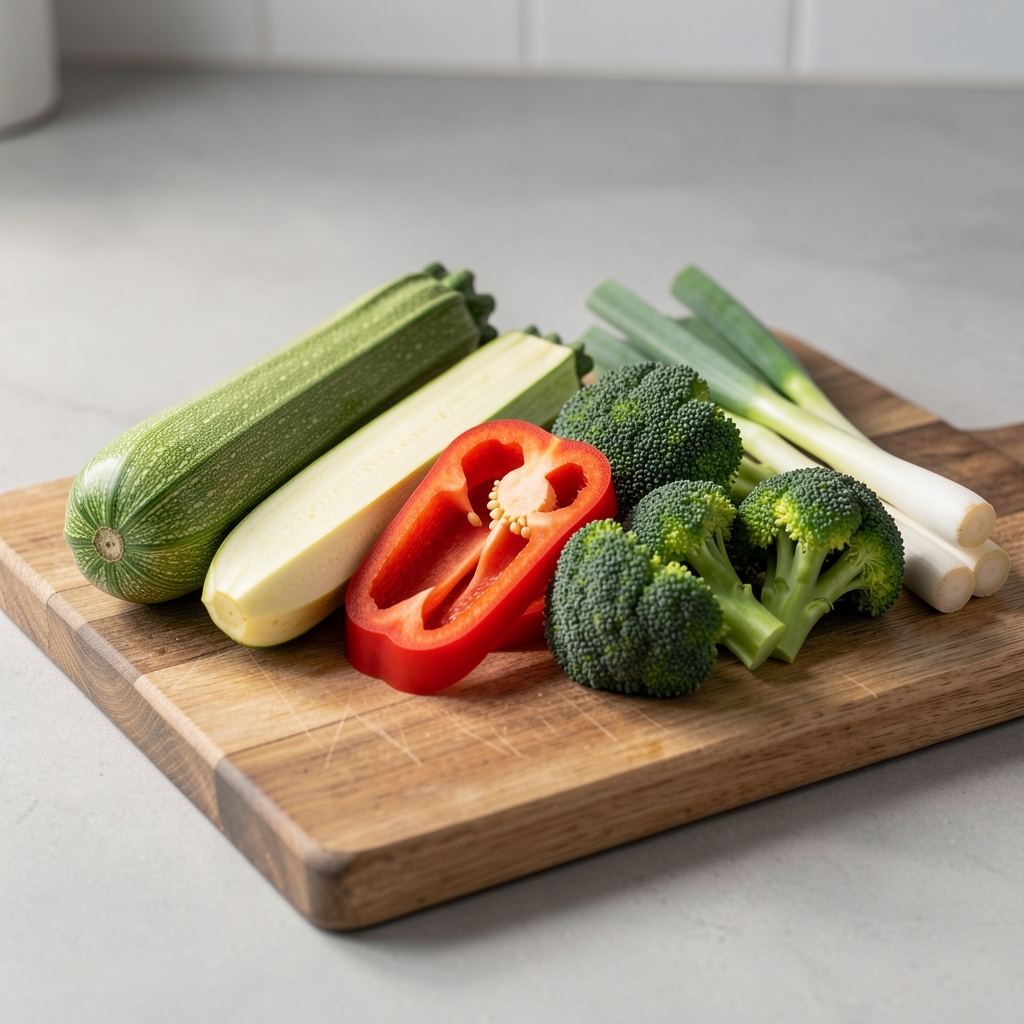
Across the documented plates, vegetables and fruits are the component most consistently below the reference ratio. This holds across breakfast (where their absence is structurally normalised), lunch (where convenience foods dominate), and — with less frequency but still meaningfully — evening meals assembled under time pressure. The five-a-day reference serves as a measurable target, but the conditions of a busy working week make consistent attainment structurally difficult rather than motivationally so.
The variability in vegetable and fruit consumption across the week is notable. Weekend meals show a markedly higher vegetable component — partly because more time is available for preparation, partly because weekend food culture in the UK more frequently involves markets, fresh ingredients, and deliberate cooking. The contrast between the weekend plate and the Thursday lunch plate, both assembled by the same person with the same stated nutritional intentions, illustrates the degree to which environment and logistics drive dietary composition.
Gut-friendly foods — fermented vegetables, diverse plant sources, legumes, high-fibre grains — appear almost exclusively in the weekend record. This is a nutritionally significant pattern: the foods associated with sustained gut function and diverse microbiome activity are structurally relegated to the days when most people have more time. For the majority of the working week, the gut receives the narrower, more processed range of foods that convenience affords.
Protein Distribution and Whole-Food Selection
Protein distribution across the week shows a different pattern from vegetable frequency. Protein-providing foods — legumes, eggs, fish, meat, dairy — appear in nearly all documented evening meals and in most lunches. The evening meal, as the most prepared of the day's three eating occasions, tends to feature the widest range of protein sources and the most deliberate selection. Eggs and legumes appear more frequently in weekend meals; processed meat products are more common in weekday lunches.
The whole-food question — whether foods are processed, refined, or consumed in a form close to their original state — intersects with both the protein and carbohydrate components of the plate. Whole-food selections (lentils over processed legume products, whole grains over refined cereals, fresh fish over processed alternatives) are disproportionately represented in weekend and evening meals. Weekday breakfast and lunch show a higher proportion of processed and refined foods by both frequency and volume.
This pattern is consistent with the structural pressures already described, but it has a compounding nutritional effect. Processed foods tend to be lower in fibre, higher in refined sugars, and associated with faster absorption rates that produce sharper energy fluctuations across the day. The dietary quality of weekday eating, as documented, is lower not because of reduced nutritional intention but because the foods most accessible under time pressure are those whose nutritional profile is most depleted.
Active Lifestyle Considerations and Nutritional Support
For individuals who integrate sport and physical activity into their weekly schedule, the nutritional structure of the working week carries additional implications. The relationship between physical activity and dietary support is well documented in nutritional research: activity levels influence energy requirements, recovery needs, and the composition of meals that most effectively support sustained physical engagement.
In the documented records, physical activity days — typically two or three weekdays plus one weekend day — show a consistent pattern of increased carbohydrate selection in the meals preceding exercise and increased protein selection in the meals following it. This adaptation appears to occur without explicit planning; it reflects the body's appetite signals interacting with available food options. The challenge for active individuals is that the most activity-supportive meals — those with adequate complex carbohydrates, varied vegetables, and sufficient protein — are structurally the hardest to assemble on weekday mornings before an early training session or a working day with a lunchtime run.
Weight management considerations are observable in the same records. The structural imbalance of weekday eating — higher refined carbohydrate content, lower vegetable volume, back-loaded caloric intake — does not in itself determine weight outcome, which depends on cumulative intake across weeks and months rather than individual days. But it does produce a consistent pattern in which the foods associated with sustained satiation and nutritional quality are least present during the days of highest activity and time pressure. The gap between the dietary support an active lifestyle would benefit from and the dietary reality of a busy working week is the structural challenge that nutritionist guidance has consistently found difficult to address through knowledge alone.
The Quiet Logic of Varied Ingredients Over Time
The most nutritionally resilient eating patterns in the documented records share one characteristic that cuts across meal type, preparation time, and budget: ingredient variety. The records that show the most consistent compositional balance — adequate vegetables, varied protein sources, whole-food carbohydrates — are those where the weekly shopping or market visit produces a wider range of ingredients to draw from. When the domestic pantry and refrigerator contain diverse options, the assembled plate reflects that diversity even under time pressure.
This observation aligns with what nutritionist guidance describes as the structural foundation of a balanced diet: variety as a sustained habit rather than a periodic effort. The single week of attentive eating followed by a return to habitual narrowness produces a different nutritional outcome than the steady maintenance of a varied ingredient base that persists across weeks and months. The latter requires fewer individual decisions at the point of meal assembly; the variety is built into the available materials rather than constructed from intention alone.
The practical implication is that the most effective point of intervention for sustained dietary balance is not the moment of plate assembly but the moment of shopping or market selection — the weekly cadence at which the available ingredient range is determined. Meal planning at this prior stage, however brief, shapes the possible compositions of every meal that follows it in ways that no amount of in-the-moment nutritional intention can fully compensate for.
- Evening meals most closely approximate compositional balance; weekday breakfasts and lunches are structurally carbohydrate-dominant due to convenience constraints.
- Vegetables and fruits are the most consistently under-represented component in weekday eating, appearing at recommended frequency primarily in weekend meals.
- Gut-friendly and whole-food selections are disproportionately concentrated in weekend cooking, reflecting available preparation time rather than preference.
- Physical activity days show appetite-driven adaptation in meal composition without explicit planning, but the most supportive meals are hardest to assemble under weekday time pressure.
- Sustained ingredient variety at the shopping stage is the most structurally effective point of intervention for maintaining dietary balance across a full working week.